• Skip to main content
  • Skip to footer

Naturopath in Burnaby and Virtual Care Across BC | Dr. Mélanie DesChâtelets, ND

  • About
  • New? Start Here
  • Current Patient
  • Free
  • Refill
  • Contact
  • Book Now
You are here: Home / Archives for Conditions / Supplements

Supplements

October 9, 2013 By Dr Mélanie DesChâtelets, ND

MEDIHERB: Withania Complex

MEDIHERB: Withania Complex 

History

The Withania Complex consists of a unique blend of Withania, Licorice, Skullcap, and Korean Ginseng that acts as an effective adrenal support.

Due to increasing stress loads, the body has developed defense mechanisms that allow one to deal with life-threatneing dangers. This response is known as the the “fight-or-flight” reaction. When the individual perceives threat, the body moves into “high gear” providing energy, speed, and concentration to fight or to run. This is accomplished through nerve and hormonal signals, which encourage the adrenal glands to release hormones. An important group of hormones produced by the adrenal glands are the glucocorticoids. They act to enhance resistance to stress and support for your health.

Although many of the stressors that our ancestors had faced are now erased, the persisting challenges of modern life cause the body to be in a constant state of stress. This chronic stress may manifest itself as sleep difficulties, digestive upset, and/or poor concentration.

Withania (otherwise known as Ashwaganda) has been traditionally been used in India as a general body tonic. It provides energy during times of temporary stress and gently strengthens the nervous system. Skullcap is a nerve tonic which supports vitality, cognitive function, and nervous system health. These effects are particularly beneficial during temporary stress. Korean Ginseng has also been used in the traditional Chinese system to support the nervous system. The potent blend of the adaptogenic herbs in the Withania Complex counteracts the effects of stress, allowing you to feel better, stronger, and healthier.


Indications

  • Helps increase endurance and stamina
  • Beneficial during times of stress
  • Helps maintain general well-being


Contraindications

  • Consult health care practitioner prior to use if you have diabetes, hypokalemia, or if you are taking any kind of hormonal therapies, diuretics, potassium depleting agents, CNS depressants, benzodiazepines, herbs with sedative properties, MAO inhibitors
  • Consult health care practitioner if symptoms persist
  • DO NOT USE if you are pregnant, breastfeeding or if you have impaired kidney or liver functions, high blood pressure, or heart disease
  • Discontinue use 7 days prior to general anesthesia


Each tablet contains:
Withania somniferia (Withania) extract equivalent to dry root                            950 mgGlycyrrhiza glabra (Licorice) extract equivalent to dry root                               750 mg

Scutellaria lateriflora (Skullcap) extract equivalent to dry root                          470 mg

Panax ginseng (Korean Ginseng) extract equivalent to dry root                         100 mg
standardized to contain ginsenosides calculated as Rg1 and Rb1 1.86 mg


References

1 Mayo Clinic Staff. Stress: Unhealthy response to the pressures of life. 12 September 2006. Available from www.mayoclinic.com/print/stress/SR00001/METHOD=print. Accessed May 2007.

2 Guyton AC, Hall JE. Textbook of Medical Physiology, 10th Edn. W.B. Saunders, Philadelphia, 2000.

3 Wagner H, Norr H, Winterhoff H. Phytomed 1994; 1(1): 63-76

4 Bone, K.  Clinical Guide to Blending Liquid Herbs. Herbal Formulations for the Individual Patient. Churchill Livingstone, USA, 2003.

5 Mills, S. The Dictionary of Modern Herbalism. Thorsons, London, 1989.

6 Mills SY. The Essential Book of Herbal Medicine. Penguin Arkana (Penguin), London, 1991.

7 American Herbal Pharmacopoeia. Ashwagandha Root – Withania somnifera: Analytical, Quality Control, and Therapeutic Monograph. American Herbal Pharmacopoeia, Santa Cruz, April 2000.

8 Kappor LD. CRC Handbook of Ayurvedic Medicinal Plants. CRC Press, Boca Raton, 1990.

9 British Herbal Pharmacopoeia. BHMA, Bournemouth, 1983.

10 Holmes P. The Energetics of Western Herbs: Treatment Strategies Integrating Western and Oriental Herbal Medicine, Vol 2, Revised 3rd Edn. Snow Lotus Press, Boulder, 1998.

11 Pharmacopoeia Commission of the People’s Republic of China.  Pharmacopoeia of the People’s Republic of China, English Edn, Vol 1. Chemical Industry Press, Beijing, 1997.

12 Venkataraghavan S, Seshadri C, Sundaresan TP et al. J Res Ayu Sid 1980; 1: 370-385.

13 Kuppurajan K, Rajagopalan SS, Sitaraman R et al. J Res Ayu Sid 1980; 1: 247-258.

14 Roy AS, Acharya SB, De AK et al. International Seminar – Traditional Medicine, Calcutta, Nov 7-9, 1992: p 161.

15 Kraus SD. J Exp Med 1958; 108(3): 325-328.
Filed Under: Supplements

October 9, 2013 By Dr Mélanie DesChâtelets, ND

MEDIHERB: Adrenal Complex

History

Licorice has been used for thousands of years around the world for many purposes including supporting adrenal health. Rehmannia is used in traditional Chinese medicine  to replenish vitality. The synergistic blend of Licorice and Rehmannia will support the adrenal glands and provide a healthy response to stress.


Indications

  • Restores adrenal function to reduce the effects of stress on the body
  • Supports adrenal gland health and energy production to help combat fatigue
  • Helps the body adapt to the challenges of everyday life
  • Promotes the body’s normal resistance function
  • Support a healthy immune system when experiencing occasional stress


Contraindications

  • Do not use if you are taking thiazide diuretics, cardiac glycosides, corticosteroids, stimulant laxatives, or other medications that may aggravate electrolyte imbalance
  • Do not use if you have hypokalemia, high blood pressure or a kidney or cardiovascular disorder


Mediherb:  Adrenal Complex

per tablet

Glycyrrhiza glabra (Licorice)

extract equivalent to dry root

Rehmannia glutinosa (Rehmannia) 

extract equivalent to dry rhizome

1.75g


750mg


Filed Under: Supplements

September 8, 2013 By Dr Mélanie DesChâtelets, ND

MEDIHERB: Rhodiola and Ginseng Complex (Rhodiola rosea and Panax ginseng)

History

Although there are many species of Rhodiola, Rhodiola rosea contains the most important constituents: rosavins and salidroside. It is commonly used in traditional Russian medicine. The root of the Korean Ginseng is commonly used in natural medicine in both China and the West, as it is known for its stress relieving properties. The powerful combination of Rhodiola and Korean Ginseng helps the body by increasing the level of resistance to stress and by fine tuning the stress response system so that the body and cells are protected from an overactive stress response system.


Indications

  • Promotes healthy glucose levels
  • Supports cognitive function and/or reduces mental fatigue (stress)
  • Enhances physical capacity/performance (in cases of physical stress)


Contraindications

  • Consult with a health care practitioner if you have diabetes or if you are pregnant or breastfeeding
  • Consult with a health care practitioner if you are taking antidepressant, blood thinners, or digoxin medication
  • Do not use if you are bipolar, manic, or have paranoid mental states


Mediherb:  Rhodiola and Ginseng Complex 

per tablet

Rhodiola rosea (Rhodiola)

standardized to contain phenylpropanoid glycosides calculates as rosavin, and rosin 4.5mg standardized to contain salidroside 1.5mg

Panax ginseng (Korean Ginseng)

extract equivalent to dry root standardized to contain ginsenosides calculated as Rg1 and Rb1

600mg


500mg


References

1 Panossian A, Wagner H. Phytother Res 2005; 19(10): 819-838

2 Panossian A, Wikman G, Wagner H. Phytomedicine 1999; 6(4): 287-300

3 Harkey MR, Henderson GL, Gershin ME et al. Am J Clin Nutr 2001; 73(6): 1101-1106

4 Genzera M, Yayla Y, Khan IA. Chem Pharm Bull 2001; 49(4): 465-467


Filed Under: Supplements

September 20, 2012 By Dr Mélanie DesChâtelets, ND

Echinacea 101

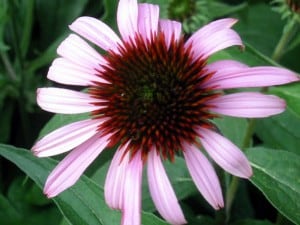
Echinacea spp. flower
Photo credit: ©2005 Cyndi Gilbert

What is echinacea?

Echinacea is one of the most well-known and misunderstood herbs in North America.  When one word can mean a plethora of different things being misunderstood becomes inevitable.  Let’s explore.

Echinacea can vary by:

1. Species

  • Echinacea angustifolia, Echinacea purpurea and Echinacea pallida

2.  Different part of plant used

  • Root , Whole plant, Flowering whole plant, Herb (aerial parts), Herb top (or Herb), Herb top flowering

3. Different extraction methods

  • Extract and Pressed juice

The permutation of these four factors results in drastic differences between the phytochemical properties of the finished preparation.  This is why echinacea preparations are not created equal and this in great parts explains the mixed results seen in the literature.  Both positive and negative studies make huge headlines that spread wide and far.  General echinacea headlines that from a general population perspective should and would confuse, isn’t echinacea always echinacea?  Who knew there are so many variations?  In much of the literature the preparations of echinacea are not or poorly defined by active phytochemicals and/or sub-therapeutic dosages are used.  Without proper identification of the preparation and rational dosing, some of the research is of no value.  A study by Wills (2008) compared the concentration of particular phytochemicals known to influence the immune system and confirmed huge variability between preparations.

What are we looking for?

There is some movement in the scientific world as to which phytochemical is most likely responsible for the immune modulating properties of this botanical.  The latest research makes a strong case for the phytochemical alkylamides.  It is the only phytochemical that has shown to possess all 3 following properties: alkylamides are bioavailable, demonstrate immunological activity in vitro studies and have been found in human plasma after ingestion. Echinacea with well defined quantities of alkylamides have been shown to  reduce the intensity and frequency of colds & flu’s.

Echinacea defined.

1. Species

Of the three species of Echinacea commonly found, Echinacea purpurea has by far the greatest concentration of  alkylamides, followed by Echinacea angustifolia.  Echinacea pallida has negligible amounts of alkylamides.  Although echinacea purpurea has greater amounts of alkylamides it is quickly metabolized while echinacea angustifolia has the capability to slow down the metabolism of the alkylamides found in echinacea purpurea. A study  (Matthias, 2007) found that the combination of echinacea angustifolia and echinacea purpurea is best in order to increase overall bioavailability.

2.  Different part of plant used

The root rhizome albeit more difficult and expensive to prepare has much more alkylamides than any other parts.  Many inexpensive products neglect to use the root and opt for other plant parts despite comparatively negligible amounts of alkylamides.

3. Different extraction methods

A high-alcohol extraction process concentrates the lipophilic phytochemicals of the root resulting in a preparation with high levels of alkylamides.  Pressed juice is obtained by a hydrophilic process that concentrates water-loving phytochemicals resulting in a preparation with low levels of alkylamides, and high levels of polysaccharides which, albeit having demonstrated immunological activity in vitro, has not been shown to be bioavailable in humans.

Coming full circle: from tradition to science and back

What is most fascinating is that the latest scientific findings are supporting the Native American tribes ways of preparing echinacea.  They predominately use echinacea angustifolia and they exclusively used the root.  Native Americans then prepared a fluid extract using high percent alcohol to extract the lipophilic (fat-loving) phytochemicals, this process ensuring high levels of alkylamides (Wagner, 1996).  Most amazingly is what is found in their text written in 1905, prior to the scientific capacity to define individual phytochemicals.  They wrote that a quality tincture would impart a tingly sensation in the mouth (Felter, 1905).  What we know today is that alkylamides are responsible for imparting the tingly sensation in the mouth and is the most promising as the main immune modulating phytochemical, thus reinforcing what the Native American tribes had clinically witnessed.

Bottom-line

As a naturopathic doctor I’ve seen my share of eye rolling when I prescribe echinacea.  Most patients are like, “really?  I’ve tried that before”.  My answer is that you haven’t likely tried echinacea from the right species, the right part, with proper extraction method at the proper dose and prescribed in an appropriate fashion. Echinacea is an herb that has amazed me clinically and that I have grown to love.


What’s has your experience been with echinacea?  Have you ever experienced the tingly feeling on your tongue when taking a tincture? I’d love to hear your comments.


Filed Under: Naturopathic Articles, Phytotherapy/herbs, Supplements

April 25, 2012 By Dr Mélanie DesChâtelets, ND

A No Brainer: 1 Thing You Need To Know About Your Brain and Aging

A study by UCLA published in the journal neurology demonstrated using brain MRI’s that individuals with more Omega-3 fish oil prevented the aging process in the brain. Individuals with more EPA/DHA had greater brain volumes and better cognitive functions such as problem solving, abstract thinking, multitasking , visual memory and executive function. These cognitive functions are all things affected by dementia.

Filed Under: Conditions, Alzheimer's & Dementia, Anti-Aging, Supplements

Footer

Phone:

604. 200. 7856

Address:

900-2025 Willingdon Ave, Burnaby (Brentwood), BC V5C 0J3

About Dr Melanie

Naturopathic Doctor offering consulting, specialty lab tests, professional grade supplements and dedicated wellness programs to BC residents via telemedicine, with offices in Burnaby – since 2010.

Let’s socialize

  • Email
  • Facebook
  • Instagram
  • Twitter

Search Site:

Copyright © 2020 Dr Mélanie DesChâtelets ND : Naturopath Burnaby & Telemedicine BC · All Rights Reserved. Privacy & Legal

Manage Consent

Okay, the boring-but-honest part: we use cookies. The digital kind, not the snackable kind (I checked). They store and read a little info on your device to keep things running smoothly and to see how the site's working overall... sometimes including a unique ID. Say yes and it all runs nicely. Say no and that's completely fine... a few features might just get a touch awkward.

Functional Always active
The technical storage or access is strictly necessary for the legitimate purpose of enabling the use of a specific service explicitly requested by the subscriber or user, or for the sole purpose of carrying out the transmission of a communication over an electronic communications network.
Preferences
The technical storage or access is necessary for the legitimate purpose of storing preferences that are not requested by the subscriber or user.
Statistics
The technical storage or access that is used exclusively for statistical purposes. The technical storage or access that is used exclusively for anonymous statistical purposes. Without a subpoena, voluntary compliance on the part of your Internet Service Provider, or additional records from a third party, information stored or retrieved for this purpose alone cannot usually be used to identify you.
Marketing
The technical storage or access is required to create user profiles to send advertising, or to track the user on a website or across several websites for similar marketing purposes.
  • Manage options
  • Manage services
  • Manage {vendor_count} vendors
  • Read more about these purposes
View preferences
  • {title}
  • {title}
  • {title}