• Skip to main content
  • Skip to footer

Naturopath in Burnaby and Virtual Care Across BC | Dr. Mélanie DesChâtelets, ND

  • About
  • New? Start Here
  • Current Patient
  • Free
  • Refill
  • Contact
  • Book Now
You are here: Home / Archives for Conditions / Gastrointestinal Health

Gastrointestinal Health

September 11, 2011 By Dr Mélanie DesChâtelets, ND

Gluten revealed. Deciphering the confusion.

Co-authored with Dr Kate Whimster, ND

Gluten awareness has greatly increased in the last decade.  This has come with great progress for individuals who must live gluten-free.  The number of individuals going gluten free has increased.  Not all of them who have chosen to go gluten-free are celiac, so what’s the rational?  There are more reactions to gluten then that of the most known celiac diagnosis.  An emphasis on celiac and the symptoms associated with it as well as different types of gluten reaction will be explored.

In a past article, we discussed the difference between food sensitivity, allergy and intolerance.  I highly recommend you review that article prior to reading this one.  Despite my best effort to avoid technical terms.  Some of the concepts of this article build on that article.

What do anemia, diarrhea, constipation, hypothyroidism, osteoporosis and a type 1 diabetes trigger have in common?  They can all be signs or symptoms of some type of reaction to gluten.  Over 100 symptoms have been to varying degrees associated with gluten.  This is why this topic is vast and confusing.

What is gluten?

Gluten is a protein found in all types of barley, rye, wheat and spelt.  An acronym to help you remember is B.R.O.W.S: Barley, Rye, Oats (debatable), Wheat and Spelt.  Oatmeal is sometimes included due to risk of contamination.  It is often farmed, transported and/or package in factories that also have gluten containing grains.  A recent study suggest most individuals with celiac can tolerate uncontaminated oats well (Kemppainen et al, 2007).  Extra precaution can be taken by purchasing Gluten-Free Oats which means careful attention to potential contamination has been considered. An example of this is Bob’s Red Mill Gluten-Free Oats.

3 types of Gluten reactions.

Celiac Disease is an autoimmune condition against the cells of the small intestine triggered by the ingestion of gluten containing grains.  Celiac disease is the best understood gluten reaction.

One in every 133 healthy people have celiac disease.  In individuals with typical celiac symptoms 1 in 56 people have celiac disease.  In people with a family history of celiac disease 1 in 22-39 have celiac disease. Sixty percent of children and 41% of adults diagnosed during the study had no symptoms (Fasano et al., 2003).

The average length of time it takes for a symptomatic person to be diagnosed with celiac disease in the US is four years; this type of delay dramatically increases an individual’s risk of developing autoimmune disorders, neurological problems, osteoporosis and even cancer (Green et al., 2005).

Celiac disease is associated with greater risk of additional autoimmune conditions.  The more delayed the diagnosis the greater the risk.  Those diagnosed with celiac disease between 2-4 years of age had a 10.5% chance of developing an autoimmune disorder. This incrementally increased by age of diagnosis.  Those diagnosed at the age of 20 years or older had a 34% chance of developing an autoimmune disorder.  Additional findings show that the later one is diagnosed, the more likely he or she is to develop an autoimmune condition (Ventura, 1999).

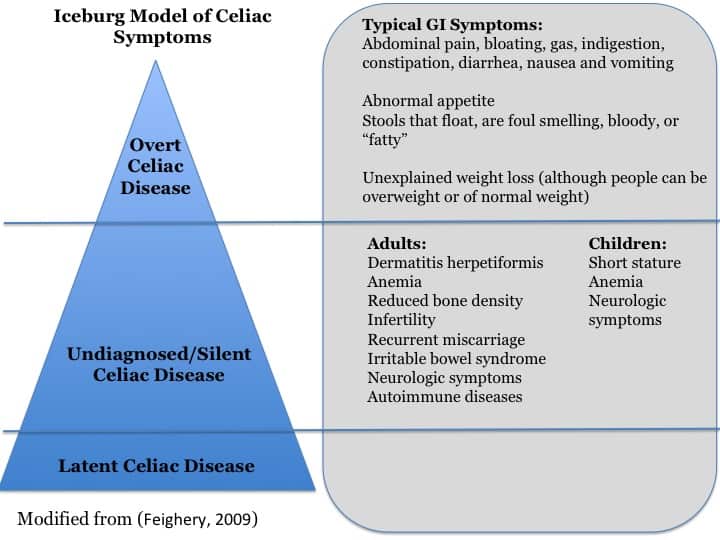
The difficulty with celiac is that symptoms can greatly vary from typical GI symptoms to an atypical form that presents with no gastrointestinal symptoms (Sanders, 2005).

Individuals diagnosed with Celiac’s must follow a strict gluten-free diet to avoid the autoimmune destruction of there small intestine and the consequential immune and metabolic consequences. The first step to celiac diagnosis involves an in office blood test.  If positive a colonoscopy of the small intestine may be performed to visualize the current damage.
 

Wheat Allergy is an IgE antibody mediated immune response to gluten.

These are your typical food allergy type reactions.  They can vary from mild itchy skin, swollen eyes to potentially life threatening difficulty breathing.  What is intriguing about this food allergy is that in some individuals with a wheat allergy, consuming wheat prior to exercise can induce anaphylaxis reaction.  Following a gluten-free diet is required.

Gluten Sensitivity is defined as every other reaction to gluten.

The definition of gluten sensitivity is broader than the definition described in my article food sensitivity, allergy and intolerance.   The simplest definition is all reactions triggered by gluten exposure and alleviated by gluten withdrawal.  The difficulty with the research on gluten sensitivity is that the symptoms are not very predictable.  Some, individuals with gluten sensitivity can experience mild to severe digestive complaints to no digestive symptoms at all. Others experience fatigue, migraines and the list goes on.  If it doesn’t always look the same how can you diagnose it?  It is a diagnosis of exclusion.  When celiac and Wheat allergy have been ruled out and an evident reaction to gluten is seen, it is labeled gluten sensitivity.  Despite it not being associated with the same risks of a celiac diagnosis, symptoms can be quite severe and debilitating.

What is it about gluten that it can be so ruinous for so many people?

“Possibly, the introduction of gluten-containing grains, which occurred about 10,000 years ago with the advent of agriculture, represented a “mistake of evolution” that created the conditions for human diseases related to gluten exposure…. a number of in vitro studies have confirmed the cytotoxicity of gluten’s main antigen, gliadin (Sapone, 2011).”

The truth is we don’t really know.  We are simply realizing that many individuals are adversely affected by gluten in different ways.  It’s really hard to know why our body seems to react to this protein differently… it just seems that in a great proportion of us it does.

What’s the bottom line?

  • If you suspect you may be having a negative reaction to gluten in your diet never eliminate it until you have had a proper work up.  I can perform a quick in office celiac test that will indicate if you have some of the blood markers for celiac.  If you eliminate gluten from your diet the test is no longer valid.
  • Once you have ruled out celiac, a strategic elimination and challenge diet can help assess the influence it has on your health.
  • Do you tolerate gluten well?  There may be no need to go gluten free although I still recommend exploring non-gluten containing grains to increase variety in your diet.
  • For more details visit the 4R GI restoration program.  Strategically and carefully understanding if foods may or may not be contributing to your symptoms is essential to the path of optimizing your health.
  • Here is a gluten free resource guide.

Do you have a story to share relating to gluten?  Please comment below.


References:

Fasano et al. Prevalence of celiac disease in at-risk and not-at-risk groups in the United States: a large multicenter study. Arch Intern Med (2003) vol. 163 (3) pp. 286-92

Feighery. Fortnightly review: coeliac disease. BMJ (1999) vol. 319 (7204) pp. 236-9

Green et al. Mechanisms underlying celiac disease and its neurologic manifestations. Cell Mol Life Sci (2005) vol. 62 (7-8) pp. 791-9

Green PHR et al. Characteristics of adult celiac disease in the USA: results of a national survey. Am J Gastroenterol (2001) vol. 96 (1) pp. 126-31

Hadjivassiliou et al. Gluten sensitivity: from gut to brain. Lancet Neurol (2010) vol. 9 (3) pp. 318-30

Kemppainen et al. No observed local immunological response at cell level after five years of oats in adult coeliac disease. Scand J Gastroenterol (2007) vol. 42 (1) pp. 54-9

PubMed Health. Celiac Disease- Sprue. (2010).

Sanders et al. Antibody negative coeliac disease presenting in elderly people–an easily missed diagnosis. BMJ (2005) vol. 330 (7494) pp. 775-6

Sapone et al. Divergence of gut permeability and mucosal immune gene expression in two gluten-associated conditions: celiac disease and gluten sensitivity. BMC Med (2011) vol. 9 pp. 23

Ventura et al. Duration of exposure to gluten and risk for autoimmune disorders in patients with celiac disease. SIGEP Study Group for Autoimmune Disorders in Celiac Disease. Gastroenterology (1999) vol. 117 (2) pp. 297-303

Image Credit: Henry Gavamaro

Filed Under: Naturopathic Articles, Conditions, Digestive health, Food allergy/sensitivity/intolerance, Gastrointestinal Health, Gluten

July 28, 2011 By Dr Mélanie DesChâtelets, ND

Food sensitivity, food allergy or food intolerance? Is it making you sick?

Food sensitivity, food allergy and food intolerance are often used interchangeably.  Should they be?  I’d like to suggest that they are very distinct and deserve to be addressed as such.  In addition, once you realize the simplicity of their differences you’ll have a significantly better understanding of the processes that are affecting you.  In order to clarify these differences let’s first review some  basic definitions used to describe some of the functions of the immune and digestive system.

Antibodies: It is a large Y-shaped protein produced by the immune system.  Its job is to recognize foreign protein and then neutralize it.  It’s what happens when you get a cold, the bacteria or virus is recognized and then neutralized by antibodies.

Enzymes:  In simple terms enzymes help breakdown things.  The important thing to note is that enzymes are very specific for what they break down. Therefore, your body has thousands of different enzymes in your body to efficiently break down very specific compounds.  Without the enzyme the process may not occur at all or at a very reduced rate. In the digestive system, enzymes help break down food into smaller units.

Both food allergy and food sensitivity are antibody mediated reactions against food.  The antibody recognizes a food protein as harmful and tries to neutralize it.  If this is similar then what is different?

We have different types of antibodies in our body.  Different types of antibodies react differently to neutralize the foreign invader.

Food allergy

Food allergy is mediated by an antibody called IgE.  When this type of antibody reacts with a foreign protein it immediately elicits some of of the following typical reactions.  Food allergy reactions can vary from uncomfortable to life threatening.  Skin irritation, redness, swelling are often seen.  Difficulty breathing can be ominous and represents tightening of the air passageway.  Other symptoms such as hoarseness of voice, stuffy and runny nose, itchy and red eyes as well as nausea and vomiting can been seen with food allergies.

Food sensitivity

Food sensitivity is mediated by an antibody called IgG.  IgG antibodies react very differently from IgE.  In food sensitivities, when IgG antibody react with a foreign protein, it elicits a milder, slower and non typical reaction.  The reactions vary from migraines, to increased behavioural difficulties in children with ADHD, to chronic digestive concerns, decreases in energy and other vague symptoms.  Here’s the killer news.  Unlike a food allergy, food sensitivities are very hard to diagnose.  This is because their impacts can be seen 24 to 48 hours after the ingestion of the offending food.  There are two ways that can help identify food sensitivities one is a strategic hypoallergenic diet.  The other is an IgG food sensitivity blood test.  This tests how reactive your IgG antibodies are against various foods.  The higher the reactivity the higher likelihood a food sensitivity might be present.  This test isn’t perfect but can really be a good starting point in assessing potential food sensitivity.

Food allergy & Food sensitivity:  How they react differently.  

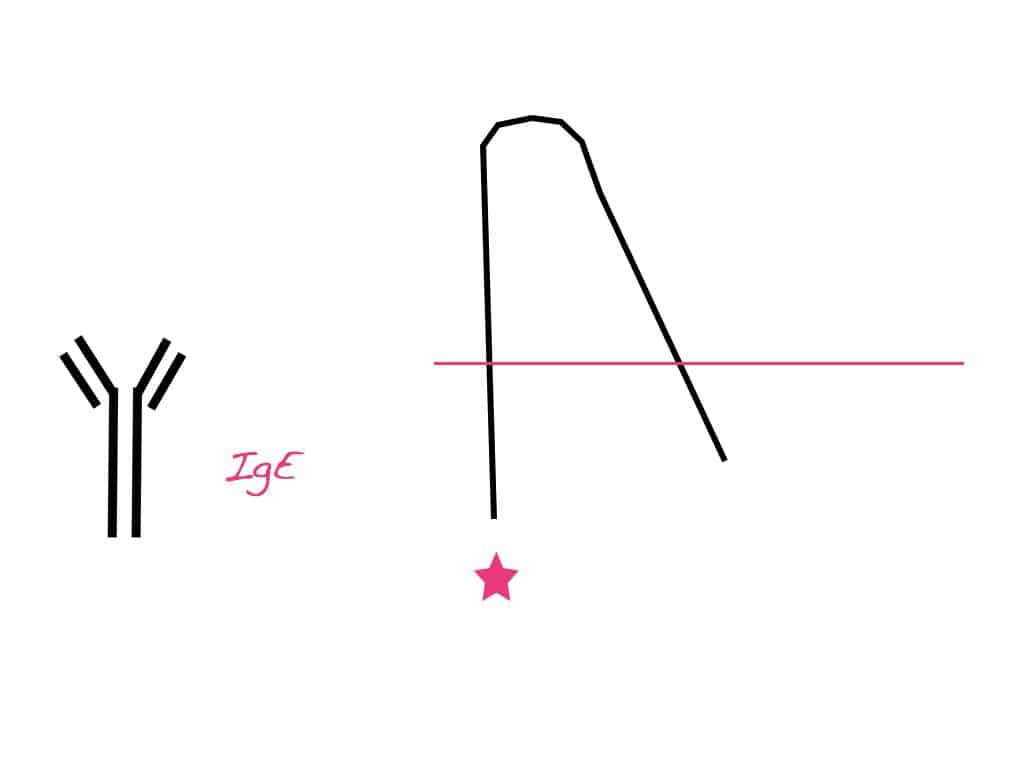
Here’s a diagram to simplify their difference.  Imagine the pink line represents the symptom threshold- when you cross this line you have symptoms.  The star represents the ingestion of the allergic food item.

Food allergy and IgE

With a food allergy, as soon as the offending food is ingested the IgE levels rise and react quickly.  The allergic symptom threshold is always reached. Avoidance of this offending food is necessary as it can be life threatening.  The levels of IgE will also drop relatively quickly and within  5-7 days you typically no longer have any symptoms.

Food sensitivity and IgG 

With food sensitivity, the offending food is ingested and the IgG antibody levels rise slowly and linger around for up to 3 weeks.  This is what makes a food sensitivity so hard to diagnose.  You first ingest the offending food sensitivity and you are symptom free.  This is because you are still far from your symptomatic threshold.  In a few days, you ingest this same food item and again no symptoms.  What you don’t know is that your IgG antibody levels have accumulated with those of your last exposure.  Third time is a charm,  you ingest the food sensitivity and this time you get “fill in the symptom blank”: a migraine, constipation, weight gain, water retention, dermatological outbreak, general fatigue etc.  Please note in this example I used 3 days but this is for illustrative purposes and is not literal.   It’s confusing.   The symptoms don’t appear immediately, it is hard to link exposure to symptoms and you are left non strategically removing and adding foods hoping something will change.  This can be a frustrating way to figure things out.  Unlike an IgE food allergy were every single exposure is followed by symptoms, IgG food sensitivities depends on frequency and dose of the exposure.

Food intolerance

Food intolerance represent an enzyme deficiency.  Our body can’t break it down and it typically causes digestive concerns.  The most infamous example is that of a lactase enzyme deficiency.  This enzyme is important in breaking down lactose found in dairy products.  The lack of this enzymes results in gas, diarrhea and discomfort.

I work with many individuals strategically to figure out potential food sensitivity reactions.  The goal isn’t to eliminate a food for the rest of your life although significant avoidance for a period of time is sometimes necessary.  Following the 4R GI restoration program we can in most cases improve the integrity of the gut lining so that you can once again tolerate the offending food.  The reality is when you figure out what’s bugging you and you understand the symptoms it generously provides it makes avoiding it much easier.

PS:  If you learned a thing or two please share this article via facebook, retweet, or google+ it. If you would like future articles delivered into your email box sign up for email updates on your right.

Filed Under: Allergy/sensitivity/intolerance, Conditions, Digestive health, Featured, Gastrointestinal Health, Naturopathic Articles

June 24, 2011 By Dr Mélanie DesChâtelets, ND

What does choosing a dog and choosing a probiotic have in common?

In the last few decades, research on probiotics has grown exponentially. Our understanding of how they can influence our gut health as well as how they influence seemingly unrelated systems such as the immune system has been greatly refined. Unfortunately, as research creates buzz, so does the marketing world and our shelves are popping up with probiotic labels everywhere. Now, we have a dilemma- how to decide which probiotics give you the bang for your buck. This current article builds on my last article explaining some of the research and the benefits of probiotics. If you haven’t read it you can check it out here.
Are all probiotics created equal?

Saying I take probiotics is as vague as saying I take vitamins. Just as different vitamins play differing roles in the body, we also know that different probiotics with different genus, species and strains do not have the same effects.
If you currently take probiotics take a look at the label now.

What do you see? Can you find the Genus, species and strain of the probiotic?

Some of the lower quality probiotics only specify the genus and species and not the strain. This is because identifying strains take an additional level of evaluation. This step however is proving to be extremely important as we are learning that probiotics with the same genus and species but different strain can play different roles in your health and do not all confer the same benefits.

To conceptualize, consider that all dogs have the same genus and species- Canis lupus. Within this genus and species we have various types of dog breeds. Visually it is evident that different breeds have very different characteristics. For example, some are great hunter dogs others are better sled dogs while some are hypoallergenic dogs. Having a probiotic that doesn’t specify strain is like looking for a hunting dog but blindly buying a dog without knowing the breed.

If you own a dog you very likely chose a specific breed of dog to suit your lifestyle. In the same way, there may be a specific probiotic strain that is indicated for the outcome you are looking for.

Take home message: Top 5 things to know before choosing your probiotic

1. Know your probiotic strain

Look for a known probiotic strain that has been tested in humans and known to confer the specific outcome you are looking for.

2. Know the colony forming unit (CFU)

CFU indicates the amount of live microbes in the supplement. Recommending a dose is very difficult as it depends on the probiotic strain and the outcome you are looking for. Doses range from 50 million to 1 trillion CFU a day.

3. Know the probiotic strain’s tolerability to digestion.

Digestion provides a rough journey for some of these living microbes. Some strains are tough naturally and others aren’t. Has the strain you are taking been studied to assess its tolerability to the gastric acid of your stomach, the bile salts of your gallbladder and the digestives enzymes of your pancreas? Some strains are tolerant; some are not. The ones that aren’t need to be formulated in capsule that will only dissolve in the lower gastrointestinal track.

4. Know your manufacturer: 3 questions to ask.

Does this manufacturer ensure that strain-identification has been done, a process that ensures you have the strain of probiotic you are looking for?  Is the manufacturer diligent about the entire process ensuring that if a probiotic needs to be refrigerated it is from the moment it leaves their hands, through shipment and until the time it gets to your home?  Have they studied the probiotic to ensure it has a stable shelf life until expiry?

5. Are you having a double rainbow “what does it mean” moment?

I know, I’m sorry but it was a bit of the point of this article. I see so many patients taking probiotics but they have no idea what strain or for what outcome. Next time you see the word probiotic I hope you can see through some of the hype of what might be good marketing versus some of the benefits the best of science has to offer today. For overall intestinal and systemic health, the most basic recommendation in adults would be the periodic use of 15-30 billion of Lactobacillus acidophilus NCFM® (talk to your primary care giver). This strain was first isolated from the human gut and has been well researched. It is known to have digestive tolerability and been shown to adhere to the human intestinal wall. It is one of the most common probiotics in the gut and one with a very good safety record. There are over 6o studies on this specific strain demonstrating various beneficial outcomes for certain conditions.
Are you looking for specific outcomes, do you have irritable bowel syndrome or disease? If so, talking to someone who is well versed in the different strains of probiotics can get you inline with the research ensuring it has the best chance at improving the outcomes you are looking for.
If you would like more info, the International Scientific Association for Probiotics and Prebiotics (ISAPP) has been created to demystify some of complexities of this ever growing and expanding body of research. Hope you’ll have a more critical eye next time you see the word probiotic.

Filed Under: Conditions, Digestive health, Featured, Gastrointestinal Health, Naturopathic Articles, Probiotics for gut health

June 16, 2011 By Dr Mélanie DesChâtelets, ND

Why you should eat bugs- probiotics that is.

From an early age most of us are taught how to be a good host to our friends.  The 3 golden rules:

  1. Make sure they have food and drink.
  2. Create an environment that will nurture that friendship.
  3. And don’t forget to have fun.

What if I told you that you have been hosting a daily party for years.   Would that be a surprise?  What if I told you the number of guest outnumbered the number of cells you have in your body.  The friends you are hosting are healthy bacteria that reside in your gut.  These friends of yours have been working for years doing critical roles that impact your health.  This party represents a symbiotic relationship- a relationship where both the host and guest equally benefit.

Who are these buggers anyways?

According to the world health organization (2001) “probiotics are live microorganisms, which, when administered in adequate amounts, confer a health benefit on the host.”

Probiotic infomercial

“We have been providing security since your birthdate.  We minimize your susceptibility to evil foreign invaders by occupying your gut wall.  When we are numerous and chilling on your wall we make it much harder for a foreign invader to fit in with us.  We literally crowd them out.

We are positive gossipers unlike the evil pathogenic counterparts.  We send positive communications to your gut cells that in return start a cascade of events important in regulating your immune system, important in decreasing inflammation as well as producing important metabolites such as vitamins and other protective molecules.”

Did you know approximately 70% of your immune system resides in your gut?  Conceptualizing that probiotics can confer digestive benefits seems plausible.  The systemic impact of probiotics on our health is far reaching and much beyond the boundaries of the gut.  Some can reduce the length of colds and flus, impact the skin, eliminate vaginal candidiasis, improve our ability to detoxify and cope with allergies.

How does your gut communicate with your immune system?  Through an immune relationship between your gut-associated lymphoid tissue and your mucosal associated lymphoid tissue.  What we know is that influencing the immune cells in your gut also results in changes in mucosal tissue.  This is why sinus issues can really be a manifestation of gut issues.

A snippet of the research (skip if you wish)

Antipathogenic barrier studies demonstrate that specific strains protect human cells from invasion of certain malignant pathogens.

Specific probiotic strains significantly reduced chronic diarrheal and vomiting in children age 6-24 months(9). Other studies demonstrate that it decreases the duration of diarrhea in acute cases as well.

Preliminary findings suggest that specific strains of probiotics reduce the activity of bacterial enzymes implicated in colon carcinogenesis.

A study looking at children age 3-5 found that “daily dietary probiotic supplementation (L acidophilus NCFM in combination with Bifidobacterium animalis subsp lactis Bi-07) for 6 months was a safe effective way to reduce fever (by 72.7%), rhinorrhea (by 41.4%), and cough incidence (by 62.1%) and duration and antibiotic prescription incidence (by 84%), as well as the number of missed school days attributable to illness (by 27.7%), for children 3 to 5 years of age.”

There are some preliminary findings with promising results that probiotic supplementation in pregnancy and in early newborn years may decrease the incidence of some atopic conditions.

Certain strains of probiotic are critical in the production of Vitamin K in the gut.

Many more roles … Busy little buggers aren’t they.

Hosting fees

There is a bit of problem.  For the most part, our society has evolved and changed its eating habits with little regard for the impact it might have on our friends.  We did have a deal after all.  They would work night and day protecting against the superpowers of evil but we did have to provide them with a nurturing thriving environment.

For the most part we haven’t been very good hosts to our inhabitants.  High fat and low fiber diets as well as acid suppressing drugs make it a rather harsh environment for them to thrive.  In addition, when we use antibiotics one of the side effect is that some of the good bacteria get killed as well.  These factors combined with the reality that our food is pasteurized and dietary sources of probiotics have greatly diminished results in a run down population. This can make us susceptible to dysbiosis or an unhealthy balance of bad to good bacteria.  Remember we had a deal and if we don’t hold our end neither will they.

Probiotic etiquette- take home message

  • Increase your dietary fiber.
  • Take proactive action after taking antibiotics with a strain specific probiotic.
  • If you depend on acid suppressing drugs on a continual basis consider a naturopathic digestive tune-up.
  • Unless you make your own unpasteurized sauerkraut your intake of probiotics is likely minimal.  Consider a daily researched strain specified probiotic such as Lactobaccilus acidophilous NCFM.

Stay tuned the next article will be on how to chose a probiotic.

Have you had a positive experience with probiotics?  I’d love to hear.


Filed Under: Conditions, Digestive health, Gastrointestinal Health, Naturopathic Articles, Probiotics for gut health

June 2, 2011 By Dr Mélanie DesChâtelets, ND

The scoop about your poop

Imagine the euphoria of observing a beautiful brown foot long sinker with all its majestic substance contrasting the beautiful white backdrop of the porcelain bowl.  The pursuit of the perfect poop is not always an easy one but is certainly one worth the mighty effort.

I am here today to start a poop movement!  The topic of poop needs to move from the nuisances of our lives to a front row Hollywood show.  Poops everywhere are here to speak up.  They have been trying to tell you something for years but have you been listening?

Let’s open the bathroom doors and liberate the knowledge of learning a new language: poop reading.

Brown poop. Yes that is normal.  Big surprise!  Ever wonder about these others colours?

Black poop may be a red flag!  When you have a digestive bleed originating in the stomach or esophagus it mixes with the acid of the stomach to make tarry black stools.  Other less worrisome causes are iron supplements and bismuth compounds such as pepto bismol.

Red poop may be a red flag!  When you have a digestive bleed originating below the stomach it will be red.  This can be a sign of colon cancer and thus should be taken with a great level of attention!  Irritable bowel diseases are also associated with bloody stools as are fissures or  hemorrhoids- you should be checked out.  The only time you can take a deep breath and relax about it is if you consumed some red beats!  Beats have a magical way of making your poop a colourful experience.  If this is the case enjoy the show.

White/Gray poop can be a sign of a bile duct blockage or liver disease.  This is also not a colour to kid about.

Green poop can be OK or a pain in the butt.  Don’t worry you will know the difference.  Fever, abdominal pain and some diarrhea likely infectious in nature.  I feel great but my poop is a tinge green?  That’s great you are probably consuming quite a bit of spinach.  As long as it’s digested there’s no need to worry.  If it’s not digested then you may benefit from a little naturopathic digestive tune-up.

Yellow poop can be a sign of pancreatic disease.  The pancreas produces enzymes critical for the proper digestion of fat.  Sub-par functioning of the pancreas can lead to yellow poop.

Floaters- once in a while floaters are no big deal.  Fat in the stool or gas can give your stool that little extra buoyancy.  Nonetheless,  if this is a consistent occurrence it can be a sign of chronic pancreatic insufficiency which means not enough enzymes are produced to break down the fat.

Sinkers– Yay, woohoo, great job!  Keep it up!

Marble poop is due to poop glue deficiency! Poop glue?!?!  Well when you ingest fiber it is fermented by bacteria that reside in your colon and it produces beautiful poop glue and lubrication.  This keeps poop from breaking into pieces.  For a lubricated and bulkier experience increase your dietary sources of fiber and water.

Soft poop not yet diarrhea but certainly not the hulk of poops either.  This tends to be indicative of malabsorption.  Some of the most common offenders are due to fructose, sorbitol, lactose in dairy, gluten in wheat or even more generalized food sensitivities.  Removing the offending culprit is key.

Thin and windy poop may be a red flag!  Progressively narrowing stool can be indicative of colon cancer!  It may also be a simple sign of excessive straining.  Go ahead relax and enjoy your poop experience- let it fall out instead of pushing it out.

Poop jam the most common cause is a simple case of dietary fiber and water “under consumption”.  If that doesn’t do the trick, perhaps a hypoallergenic diet should be considered.

Diarrhea can be caused by a GI infection, malabsorption or food sensitivity.

Our poop is a great indicator to the health of our digestive system.  Our digestive system is one of the most fundamental systems to our health, influencing seemingly unrelated systems such as the immune system, respiratory health, skin health and joint health.  Just remember we are giant walking tubes from our mouth to our anus.  The digestive track is a major system in which we interact with the outside world.  It’s important we have it working as best we can!  I wish you daily successes along your pursuit of perfect poos.


Filed Under: Naturopathic Articles, Conditions, Digestive health, Featured, Gastrointestinal Health, Poop

Footer

Phone:

604. 200. 7856

Address:

900-2025 Willingdon Ave, Burnaby (Brentwood), BC V5C 0J3

About Dr Melanie

Naturopathic Doctor offering consulting, specialty lab tests, professional grade supplements and dedicated wellness programs to BC residents via telemedicine, with offices in Burnaby – since 2010.

Let’s socialize

  • Email
  • Facebook
  • Instagram
  • Twitter

Search Site:

Copyright © 2020 Dr Mélanie DesChâtelets ND : Naturopath Burnaby & Telemedicine BC · All Rights Reserved. Privacy & Legal

Manage Consent

Okay, the boring-but-honest part: we use cookies. The digital kind, not the snackable kind (I checked). They store and read a little info on your device to keep things running smoothly and to see how the site's working overall... sometimes including a unique ID. Say yes and it all runs nicely. Say no and that's completely fine... a few features might just get a touch awkward.

Functional Always active
The technical storage or access is strictly necessary for the legitimate purpose of enabling the use of a specific service explicitly requested by the subscriber or user, or for the sole purpose of carrying out the transmission of a communication over an electronic communications network.
Preferences
The technical storage or access is necessary for the legitimate purpose of storing preferences that are not requested by the subscriber or user.
Statistics
The technical storage or access that is used exclusively for statistical purposes. The technical storage or access that is used exclusively for anonymous statistical purposes. Without a subpoena, voluntary compliance on the part of your Internet Service Provider, or additional records from a third party, information stored or retrieved for this purpose alone cannot usually be used to identify you.
Marketing
The technical storage or access is required to create user profiles to send advertising, or to track the user on a website or across several websites for similar marketing purposes.
  • Manage options
  • Manage services
  • Manage {vendor_count} vendors
  • Read more about these purposes
View preferences
  • {title}
  • {title}
  • {title}